
Building Sustainable homes in Hampshire
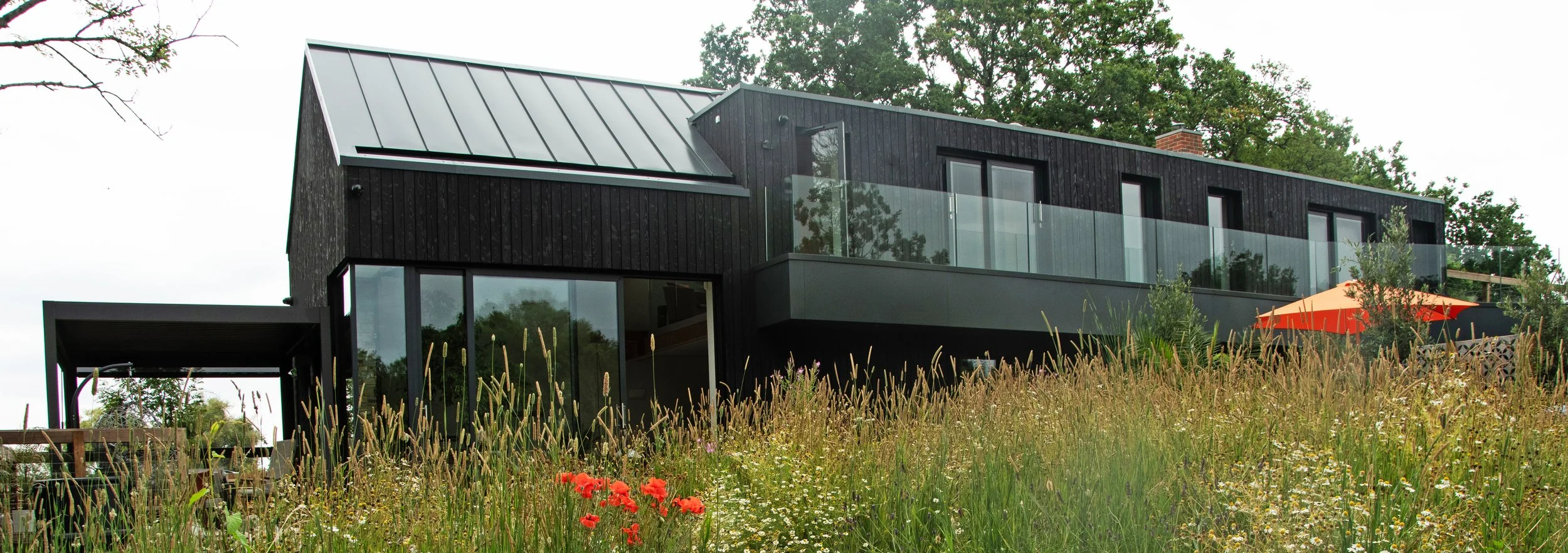
Building a sustainable home in Winchester
When designing a new home, sustainability should be considered from the very beginning, rather than added towards the end of the design. It doesn’t necessarily mean complicated technology or a particular architectural style. Often, the most effective decisions are made by understanding the site, designing the building well and choosing materials and systems that will perform for many years.
Start with the site
Every site has opportunities and constraints that can influence the design. The position of the house, its orientation and its relationship with neighbouring buildings, trees and the landscape can all affect how it performs. Getting the orientation right can help make the most of daylight and solar gain, while the position and size of windows can be considered alongside views, privacy and overheating. These are architectural decisions first, but they can also have a significant environmental benefit. At Treetops Lodge , an accessible new home in Braishfield, for example , the design responded to the character of the site and its sensitive setting.
Get the building fabric right
A well-designed building fabric is fundamental to an energy-efficient home. Good insulation, high-performing windows and careful attention to airtightness can reduce heat loss and help create a comfortable internal environment. The detailing matters too. Junctions between walls, roofs and floors need to be considered carefully to minimise heat loss and avoid problems later. Technology is useful, but it works best when it is supported by a building that performs well in the first place.
Consider how the house will be heated
Once the building fabric has been considered, the heating system can be designed around the house. Air source heat pumps can provide an efficient source of heating and hot water, particularly when combined with a well-insulated building and a suitable heat distribution system. Solar panels can also help generate electricity on site. The important thing is to consider these systems as part of the overall design rather than adding them as an afterthought.
Designing for warmer summers
Energy efficiency isn’t simply about keeping a house warm in winter. With warmer summers becoming more common, overheating needs to be considered from the outset. Large areas of glazing can create wonderful connections with gardens and bring natural light deep into a house, but they can also introduce unwanted solar gain. Orientation, window sizes, shading and ventilation all need to work together. A comfortable home should work throughout the year.
Materials that last
The materials used to construct a house have their own environmental impact. There isn’t always one material that is automatically the most sustainable. Durability, maintenance, manufacturing, transportation and how a material can be reused or disposed of can all be relevant. I generally favour materials that are appropriate to their setting, robust and capable of ageing well. In Winchester and Hampshire, the local architectural character can also provide inspiration, whether that means using brick, timber, stone or more contemporary interpretations of traditional materials.
Design for the long term
A sustainable home should also be a home that lasts. That means considering how the house might work as circumstances change. A flexible room, good storage or a layout that can adapt over time can reduce the need for major alterations later. The most sustainable house isn’t necessarily the one with the most technology. It is one that is thoughtfully designed, comfortable to live in and capable of serving its occupants well for many years.
Sustainability is part of good design
For me, sustainable design isn’t a separate layer added to a project. It is part of designing the house in the first place. The site, orientation, building fabric, heating, ventilation, materials and future use all need to be considered together. The result doesn’t need to look like a “sustainable house”. It should simply be a well-designed home that is comfortable, efficient and appropriate to its surroundings.
Thinking about building a new home?
If you’re considering a new home in Winchester or Hampshire, it is worth thinking about energy performance and sustainability at the earliest stage. At Solv architects, I can help you explore the potential of your site and develop a design that considers how the house will look, feel and perform for years to come.