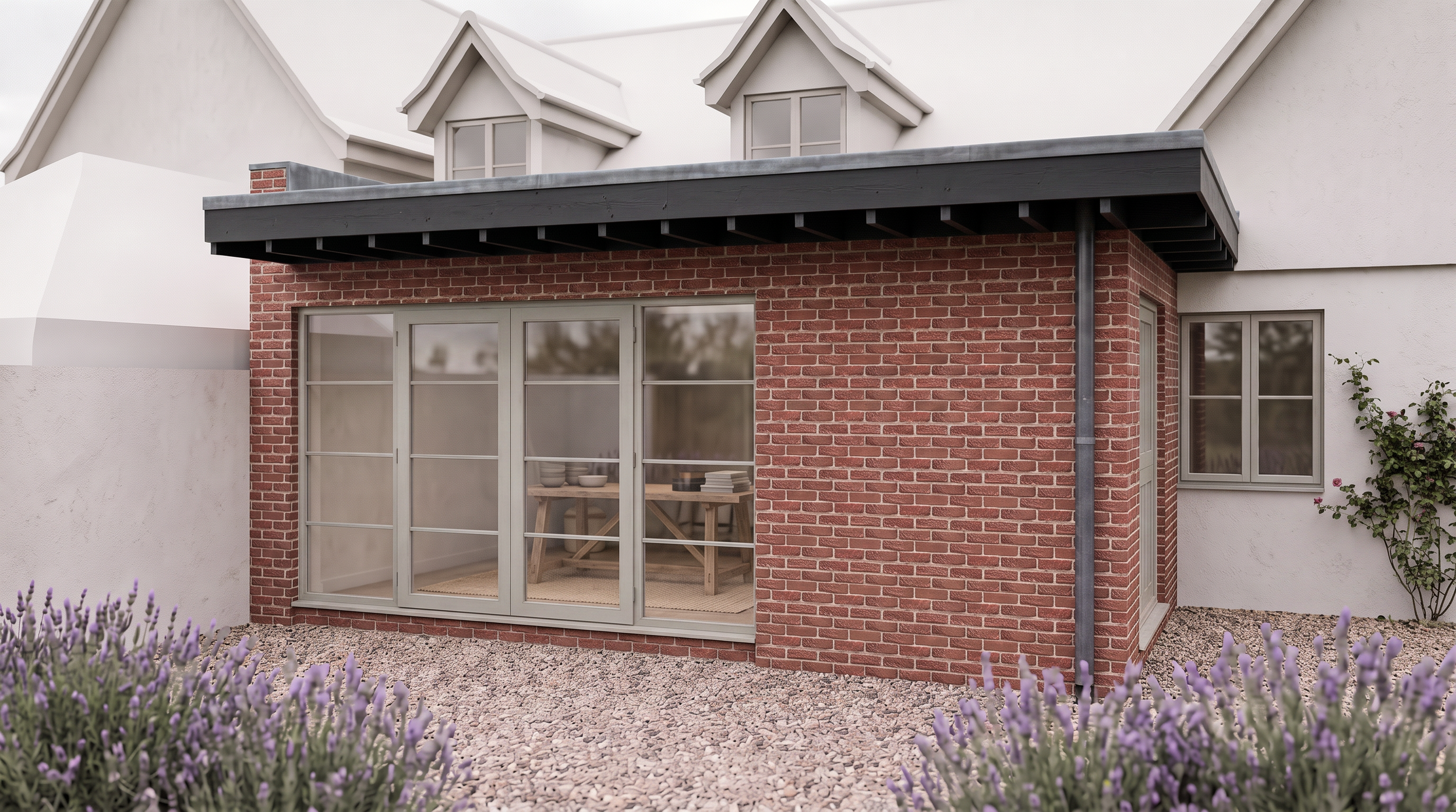
Blending Modern and Traditional Design in Winchester Homes
Blending Modern with Traditional
One of the most interesting parts of designing an extension or renovation is finding the right relationship between the old and the new.
Many of the homes I work with have planty of character but weren’t necessarily designed around the way we live today. A new extension can provide the extra space, light and connection to the garden that a family needs, while still respecting the qualities that made the original house appealing. The challenge is getting that balance right.
Understanding what is already there
Before thinking about adding anything, I look carefully at the existing house. Its proportions, roof form, brickwork, stone, windows and detailing all contribute to its character. This doesn’t mean that a new extension has to copy the original building. In fact, trying to recreate an older style can sometimes make an addition feel less convincing. Instead, the aim is to understand the building and then make thoughtful decisions about how the new part should sit alongside it.
Match or Contrast
There are different ways of approaching an extension. Sometimes the best solution is to use materials that closely complement the existing house, creating a quiet addition that feels as though it has always been belonged. In other projects, a more contemporary approach can work really well. Simple forms , larger areas of glazing and modern materials can clearly distinguish the new from the old while still creating a harmonious whole. The important thing is that the contrast is intentional.
A contemporary extension shouldn’t simply look like a modern box attached to the back of an old house. Equally , a new extensiondoesn’t need to pretend that it as built at the same time as the original. Good design is otten about finding the point where the two approaches work together.
Materials Make a Difference
Materials are one of the simplest ways of creating a relationship bewtween old and new. Brick, for example, can be carefully selected to complement existing brickwork without trying yo reproduce it exactly.Timber, stone, render and Zinc can also be introduced in a way that feels appropriate to the house and its surroundings. The smaller details matter too. Window proportions, roof edges, brick detailing and how materials meet can have a surprisngly big impact on how an extension feels. I often find that a relatively simple palette of well-chosen materials works better than trying to introduce too many different finishes.
Bringing more light into older homes
Older houses can sometimes have smaller windows and rooms that weren’t designed around the levels of natural light we have become accustomed to. An extension provides an opportunity to change this. Large openings, rooflights and carefully positioned glazing can bring daylight much further into the house and create a stronger connection with the garden.
But more glass isn’t automatically better,. The position and proportion of openings need to work with the exisiting house and consider provacy, overheating and how the rooms will actually be used. The best solutions usually feel natural rather than excessive.
Making old and new work together
One of the things that can make the biggest difference is how the new space connects to the existing house. A change in floor level , a narrow doorway or an awkward transition can make an extension feel like a separate room that has simply been added on. Good planning can make the relationship much more seamless. Sometimes, this means opening up the back of the existing house to create a stronger connection with ths new extension. In other cases, retaining some of the original layout can help preserve the character of the house. There isn’t a single answer. Every building and every family is different.
Getting the proportions right
Prehapps more than anything else, proportion is what makes an addition feel comfortable. An extension can be quite contemporary in appearance and still sit beautifully with a traditional house if it scales, roof form, openings and relationship to the original building have been carefully considered. Conversly , an extension that tries very hard to match an existing house can still feel wrong if the proporations aren’t right.
This is why good design isn’t simply about choosing materials or deciding whether something should look modern or traditional . It is about considering the whole building and how all the different elelments relate to one another.
A home that works for you
For me, the aim isn’t to make an extension stand out for the sake of it. Its about creating a home that works better for the people living in it -more useful space, better natural light, improved connections between rooms and a stronger relatioship with the garden. Sometimes that means a contemporary addition . Sometimes it means something much quieter and more sympathetic. The most successful projects are often those where the new and old feel comfortable together, without either one having to compete for attension.
if you’re considering extensing or renovating your home, our process explains how we approach a project from intiial conversation through to construction. Or take a look at some of our projects