
Getting light into your home
Letting the Light In
Natural light can transform a home before anything else has changed. A room that once felt cramped or gloomy can suddenly feel open, calm and welcoming simply because daylight has been given a better route in.
That is why I think about natural light from the very beginning of a project. It affects how spacious a room feels, how comfortable it is to use and how connected it feels to the garden and the changing seasons.
When I’m designing an extension or rethinking an existing home, I don’t see daylight as an afterthought — and I don’t think the answer is simply to add as much glass as possible. It’s about understanding what is limiting the light, how it moves through the house and what will work best for each room at different times of the day.
Making darker rooms work harder
Many older homes, particularly terraced houses, contain rooms that feel quite dark. North-facing rooms are a common example, receiving little direct sunlight, while neighbouring properties, extensions and boundary walls can restrict the available daylight even further.
The first thing I usually look at is whether the existing openings are working as effectively as they could. Repositioning a window, increasing its size or introducing glazed doors can bring more light into a room while also creating a stronger connection with the garden.
These changes can improve the way the whole space feels. Rather than having a series of separate, enclosed rooms, a kitchen, dining or living area can become a brighter and more open part of the home.
Of course, not every room has access to an external wall or a garden. In those situations, it’s worth looking at other ways to bring daylight in.
Looking up as well as out
When a room can’t have a large window or opening onto the garden, looking upwards can be particularly effective.
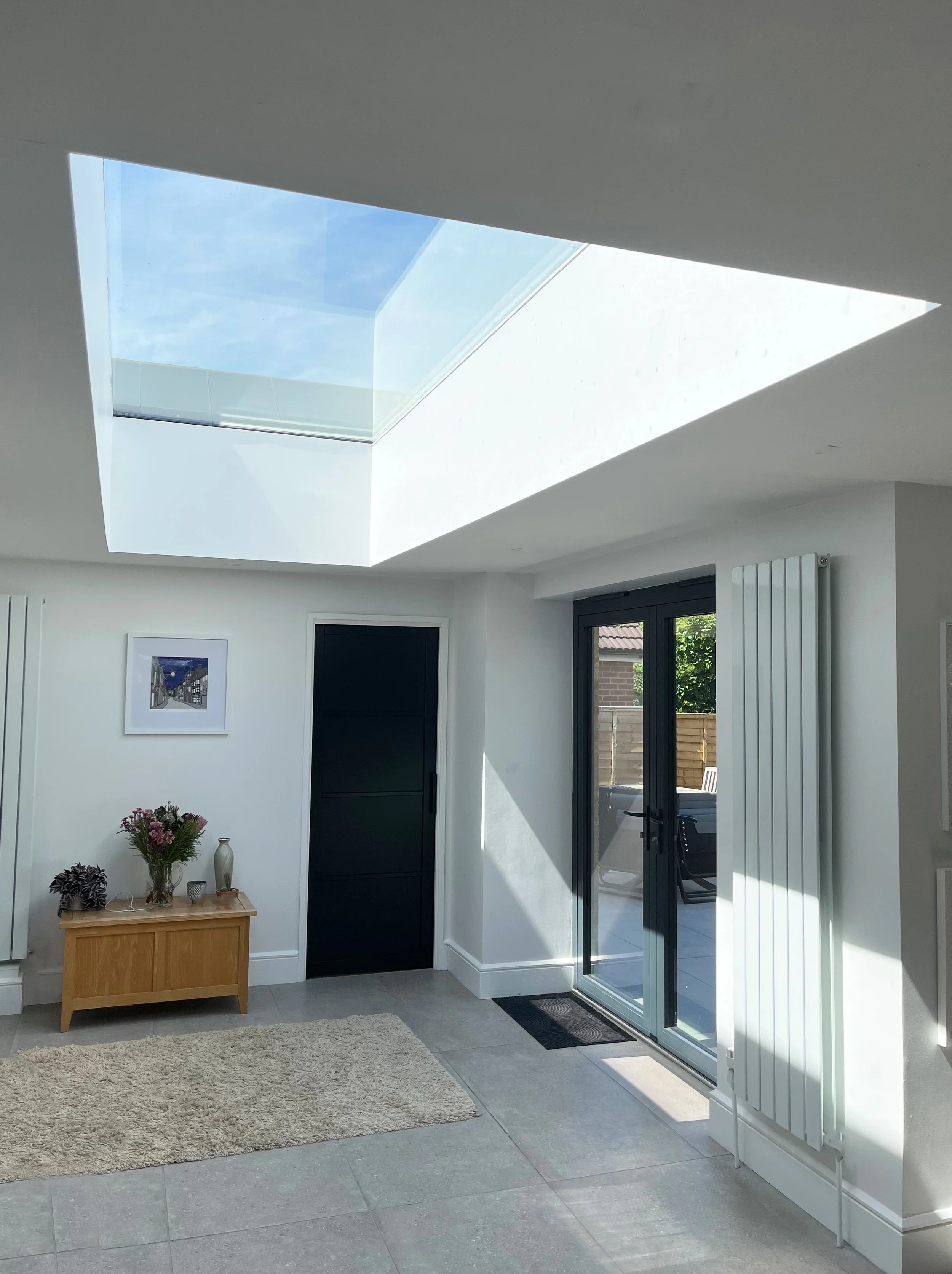
Roof lights and roof lanterns can introduce light from above, bringing daylight into the centre of an extension where it might otherwise feel quite enclosed. Sun tunnels can also work well in smaller or darker spaces, such as hallways and bathrooms, or in rooms where a conventional roof light isn’t practical.
The position of these openings matters too. A carefully considered roof light can bring daylight surprisingly far into a room, rather than simply creating a bright patch directly underneath it.
It’s also important not to assume that more openings will automatically create a better result. The quality and control of the light are just as important as the amount.
More glass isn’t always better
It can be tempting to think that the answer to a dark room is simply to add as much glass as possible. In reality, good daylighting is about balance.
The direction a window faces, the time of day the room is used and what surrounds the house all make a difference. A large south- or west-facing window might provide wonderful light and warmth in winter, but it can also lead to uncomfortable temperatures in summer.
This is becoming increasingly important as our climate changes and we experience more frequent periods of very warm weather. A design that brings in plenty of daylight also needs to prevent the room from overheating.
That’s why I like to consider sun shading from the beginning, rather than treating it as something to add later. External shading, carefully positioned overhangs, blinds, planting and the orientation of openings can all help control unwanted solar gain while still allowing useful daylight into the home.
Designing with the changing seasons
Natural light is constantly changing, and that is part of what makes it so interesting to design with.
The quality of morning light is different from afternoon light. Winter sunlight behaves differently from summer sunlight. Trees lose their leaves, gardens change and the sun moves across the sky.
Good design works with these variations rather than trying to create exactly the same conditions all year round. A window might capture low winter sun, while planting or external shading can help filter stronger summer light. A roof light may brighten the centre of an extension during the day, while its position and size can be carefully judged to avoid glare or overheating.
For me, the aim isn’t simply to make a room brighter. It’s to understand how light moves through the house and use it to make each space feel better throughout the day and across the seasons.
A well-positioned window, a roof light or a carefully designed opening can sometimes make a surprisingly small intervention feel like a major improvement to a home.
And perhaps that is why natural light is so important. You notice it when it’s missing, but when you get it right, you simply notice how good the room feels. Take a look at some of our projects to see how we have achieved that.